
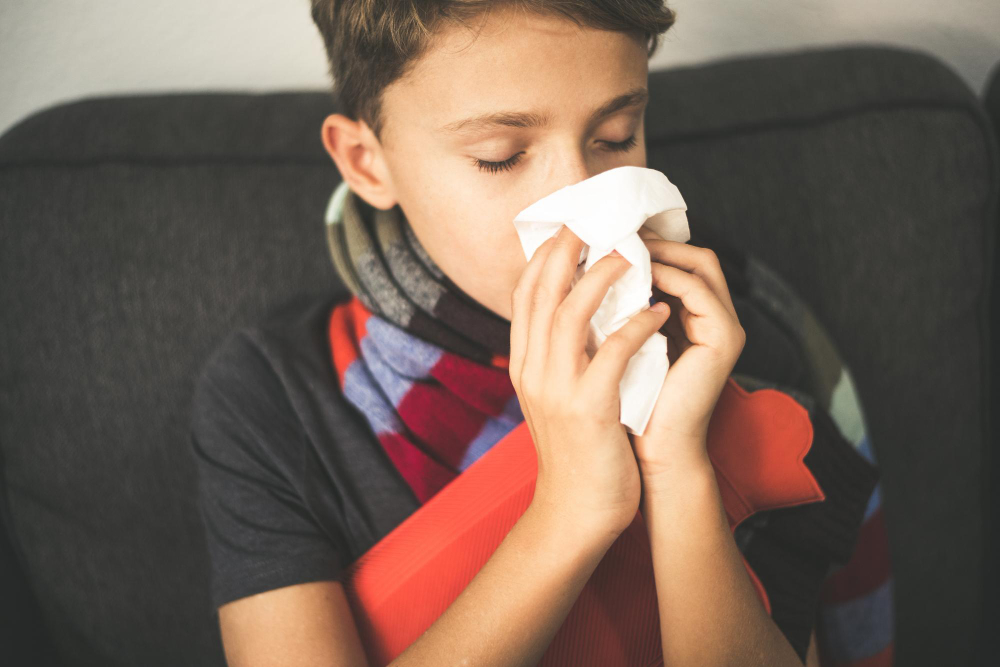
What is the Flu in Children?
The flu in children is a common illness caused by the influenza virus. It spreads easily, especially during the colder months. Children can catch the flu at school, daycare, or even at home. Because their immune systems are still growing, kids can get sick quickly. Early care helps prevent serious problems. The flu in children is different from a cold. It often comes on fast and can make your child feel very sick.
Common Symptoms of Flu in Children
Flu symptoms in children can appear suddenly. While some signs may seem mild at first, others can be more severe. Watch for these common pediatric flu symptoms:
Because symptoms can change quickly, it is important to watch your child closely. If you notice trouble breathing or confusion, seek help right away.
Causes and Risk Factors
The flu in children is caused by the influenza virus. This virus spreads through droplets when someone coughs, sneezes, or talks. Kids are more likely to catch the flu because they spend time in groups. Some children are at higher risk for severe illness, including:
Because the flu virus changes every year, even healthy kids can get sick. Getting a yearly flu vaccine helps lower the risk.
How is Flu Diagnosed in Children?
Doctors diagnose the flu in children by looking at symptoms and doing a physical exam. Sometimes, they use a quick test called a rapid flu test. This test uses a swab from the nose or throat. Results can come in 15 minutes. However, not all children need this test. If your child has severe symptoms or is at high risk, the doctor may order more tests. Early diagnosis helps start treatment sooner.
Treatment Options for Children with Flu
Treatment for child flu depends on the severity of symptoms. Most children get better at home with rest and fluids. However, some may need medicine. Doctors may prescribe antiviral drugs if:
Antiviral medicines can shorten the illness and prevent complications. Over-the-counter medicines may help with fever or pain, but always check with your doctor first. Never give aspirin to children, as it can cause serious side effects.
Home Care and Lifestyle Tips
While your child recovers from the flu, home care is important. Here are some helpful tips:
Because children can feel tired for days, let them return to school only when they feel better and have no fever for 24 hours.
Preventing the Flu in Children
Prevention is the best way to protect your child from the flu. Here are some proven steps for preventing flu in kids:
Because flu season can start early, get the vaccine before the season begins. In some areas, local health clinics offer free or low-cost flu shots for children.
When to See a Doctor
Most children recover from the flu at home. However, you should call your doctor if your child:
Because young children can get sick quickly, do not wait if you are worried. Early care can prevent serious problems.
For personalized advice, consult a pediatrician at Svaraaj Hospital if your child shows flu symptoms.